The Drama Triangle
Posted: February 18, 2011 Filed under: Think | Tags: power, self-expression, think Leave a comment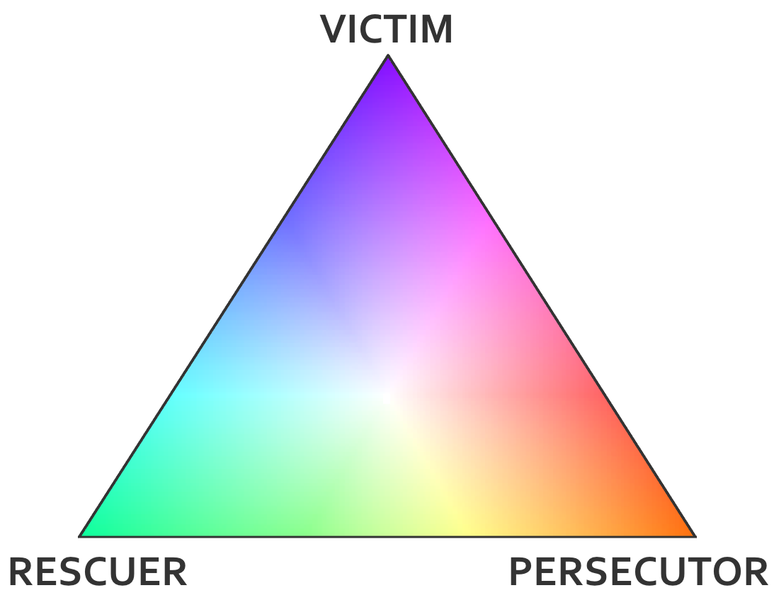
The Drama Triangle (according to Wikipedia) was first introduced in 1968. Today, it’s been referred to by a number of names, the “Victim Triangle”, or the “Shame Triangle”. It’s a diagram used to explain modes of behavior that people relate from, often unconsciously, in order to avoid feeling shame… the shameisn’t usually related to the actual event at hand, when the roles are being played. Instead, the roles themselves become a rote way of behaving, like a pattern set up to avoid feelings of shame for some deep-rooted historical event.
It’s not about real victimization or altruistic behavior. When people play these roles, they’re living entirely in a melodrama, a story. They aren’t present. They’re not experiencing personal power and/or self-expression.
It’s a pervasive way of being… in business, in the media, in the culture. We complain about the government, or what an awful job the president is doing, or how we hate our jobs, or traffic, etc. We’re prone to conspiracy theories. Authority, pressure, and even a healthy assertion of boundaries can be interpreted as oppressive, abusive behavior. “I can’t believe my boss never supports me.” The statement itself implies an abuser. It’s an attempt to redirect the shame on to the boss. If someone hears someone else making those same criticisms and complaints, they might chime in, to Rescue. On the outside, it seems supportive. In reality, it just supports (even creates) the powerless Victim. And, if the Victim or Rescuer can enroll one another, then they can have a common “bond” against their oppressor.
That bond is entirely false. All of the drama and emotions aren’t real, they’re just made up for the purposes of playing these roles.
Being powerful and present would involve direct conversation, with real emotions. It’s possible to have accountability without shame, to have real conversations about complex issues instead of rote sound bytes. Relating to others as equals interrupts these patterns, these roles, and gets us back into the real world and back into power and self expression.
 thoughtboss